Maria Parrella-Ilaria, Sault Ste. Marie ON | Voices of PKD
My name is Maria, and I am a visual artist and former art therapist/arts educator, currently living in Sault Ste. Marie, Ontario, with my husband - author and musician Mark - and our two bossy felines. These days, I’d describe myself as persistent, determined, stubborn, and grateful.
Unexpected Diagnosis
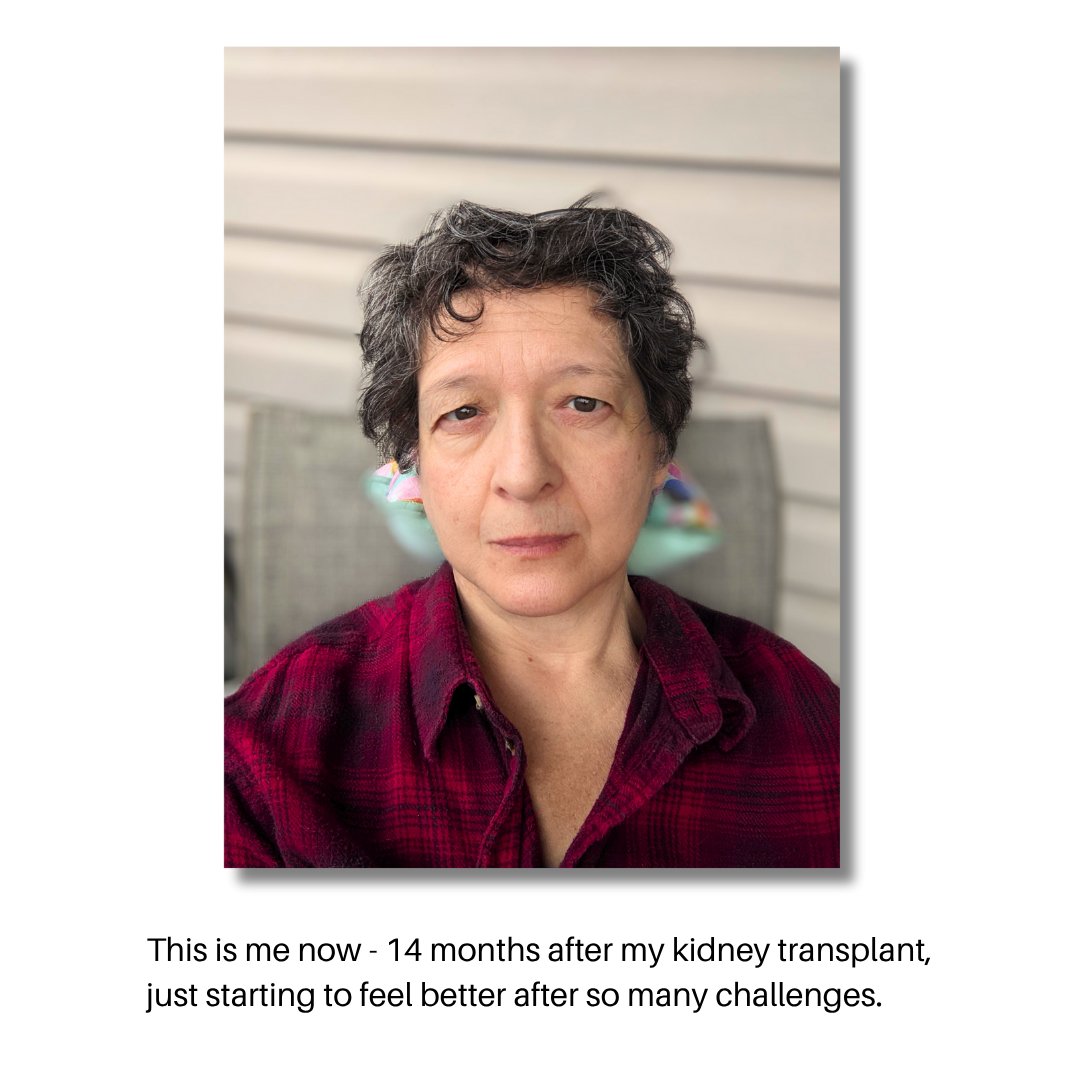 I was initially diagnosed with PKD in 1987, when I was 26 years old and a student at Concordia University in Montreal. The campus doctor was curious about something they saw in my standard blood panel and ordered more in-depth tests. Shortly thereafter, they diagnosed me with PKD. At the time, I was told there was nothing to be done about it, except to prepare for dialysis later in life.
I was shocked, truly perplexed, and felt pretty lost. I had a hard time wrapping my brain around the diagnosis and what it meant - especially the part about there being nothing to be done except live life and wait for kidney failure. I knew that some family members were struggling with "kidney disease," but even that seemed vague. The outcomes were uncertain, and treatment options were unclear.
Family Clues
I didn’t know much about PKD before hearing the term from my campus physician. Back home in the Sault, I knew one of my older male cousins had multiple health issues, and his kidneys seemed to be a major concern. Eventually, PKD was identified as the disease he was struggling with, but even then, there wasn’t much information shared. Planning for dialysis seemed like the only real treatment option. Transplant was mentioned occasionally, but since he had other health complications, it seemed out of reach.
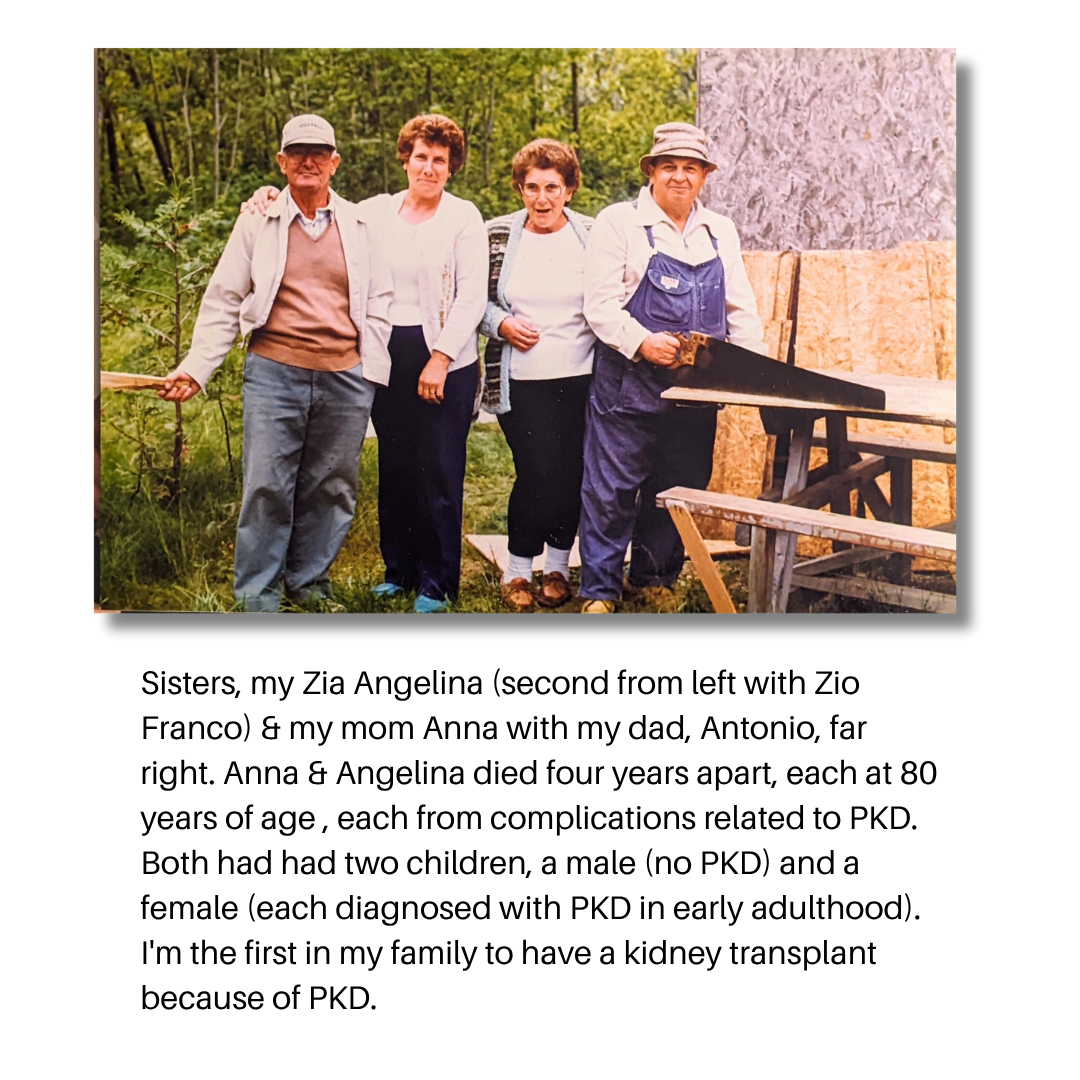 Alongside my cousin, my mother - his paternal aunt - was also being treated for kidney-related issues: flank pain, leg swelling, high blood pressure. Again, PKD wasn’t named at first, and testing was minimal. I have no memory of her receiving scans to check kidney size or for cysts, and certainly no MRIs to check for cerebral aneurysms, which nearly took her life in 2001.
Of course, I wish we had known then what we know now - about the role of nutrition in controlling cyst growth, and about medications that target the mechanisms behind that growth. About the more hopeful aspects of a PKD diagnosis. But that’s wishful thinking. Research happens at its own pace, and we’re lucky if we live in a time when we can benefit from it.
I inherited PKD from my mother’s side of the family, most likely through her mother. My mother had PKD, as did her younger sister and older brother, along with their mother - my maternal grandmother. The first person diagnosed in our family was my mother’s nephew (her older brother’s eldest child). All of them passed away from complications due to PKD. There are numerous cousins, children of that uncle and aunt, who also have PKD - and many of them now have children living with the disease.
Different Journeys
What has surprised me most is how differently PKD progresses for everyone. My mom reached end-stage renal disease (ESRD) at the age of 78. My cousin at 52. I needed a transplant at 62.
When I was diagnosed in my 20s, I was told that doctors look at the disease progression in the affected parent to make an “educated guess” about how it will go for the child. So I was surprised when, in my late 50s, it became clear that I needed to plan for dialysis or a transplant as soon as possible. Discussions about dialysis or transplant didn’t begin for my mom until her late 70s.
One of the most challenging things about having PKD has been the depression that creeps in when you watch your quarterly bloodwork show the steady decline of kidney function, regardless of diet or medication.
Purpose
Knowing there were options ahead - dialysis, transplant - helped me manage the terror of watching my kidneys fail. I kept working (probably longer than I should have) to give myself a sense of purpose, and I made sure to see family and friends as often as I could. Being in a committed and supportive marriage helped me stay focused on making the best of things while living with a chronic, debilitating disease like PKD.
The thing that gave me the greatest hope was knowing that PKD researchers were (and still are) constantly working on new treatments. I was lucky to be on Jinarc (tolvaptan) for seven and a half years, which certainly helped slow my decline.
I wish more people understood that PKD exists - that it’s a very common reason for kidney failure - and that it can be terrifying for those of us living with it, knowing how much it slowly takes away from us.
Transplant
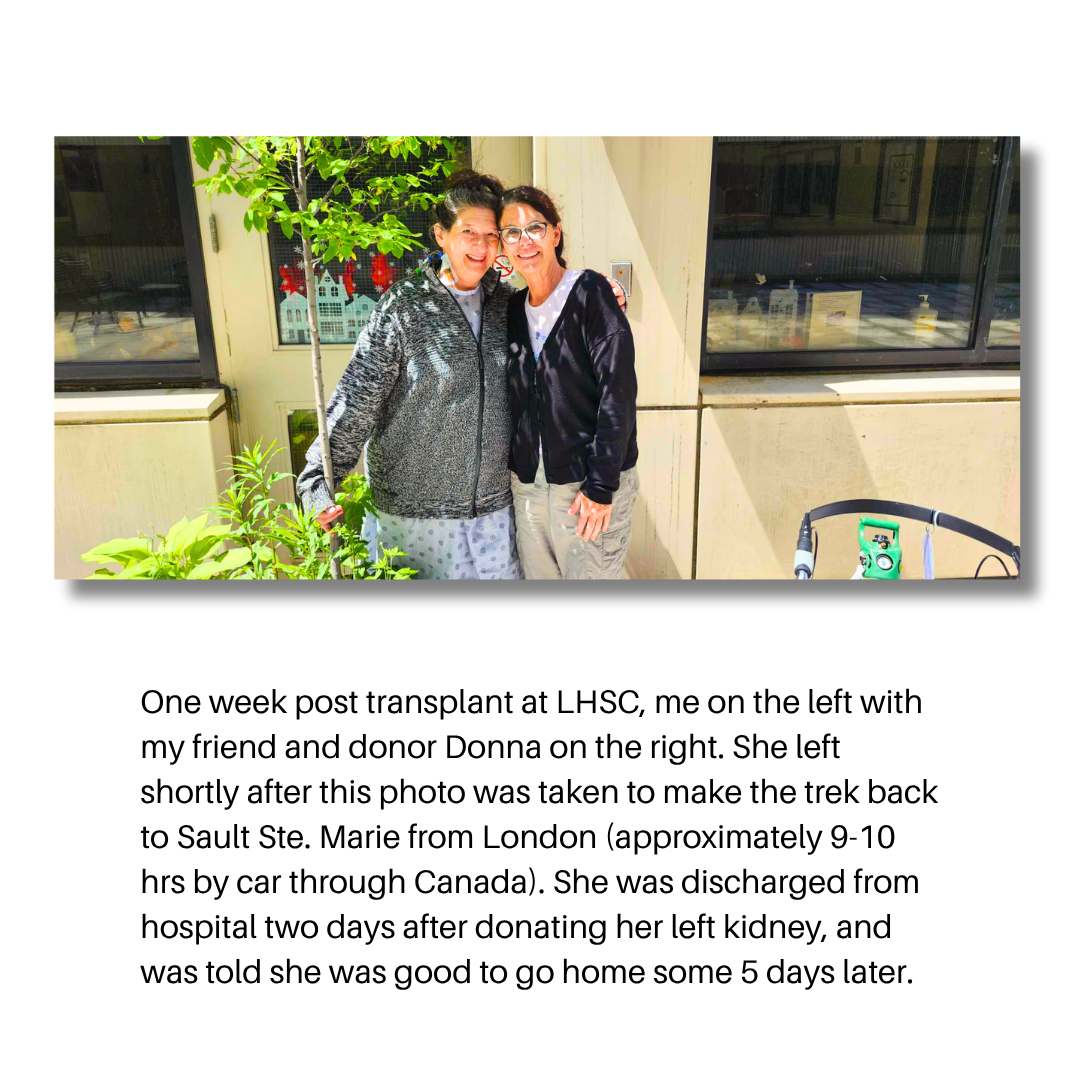 I had a living donor kidney transplant in May 2024 at University Hospital, London Health Sciences Centre in London, Ontario. I was 62 years old at the time. But the process began about a year earlier, with tests, bloodwork, vaccines, and more, all coordinated through London’s transplant assessment centre and my local renal unit here in Sault Ste. Marie. My pre-transplant coordinator, Hannah, made the process as smooth as possible and kept me informed about what London’s team needed to assess my viability as a transplant candidate.
In December 2023, I went to dinner with friends. It was the end of the year-long preparation for London’s transplant assessment. At dinner, I mentioned that my husband was also being evaluated as a living donor, through the Kidney Paired Donation Program. One of my friends got very excited. She’d always been registered as an organ donor and immediately offered to go through the assessment process. She was also fairly certain that she was blood type O, which I am - and which I needed for transplant.
Long story short: in January 2024, I was assessed in London and accepted for transplant. She was assessed and accepted by March as my donor. By April, we had a surgery date for May 15. We were deemed an excellent match.
The operation went well. I healed quickly, had minimal pain, and was up and walking within a few days. The first thing I noticed was that my vision got clearer. My husband said my skin was finally pink again, instead of the greyish cast I’d had for the last year. My brain fog lifted, and food (yes, even hospital food!) started tasting wonderful - not just salty or sweet.
Uneven Healing
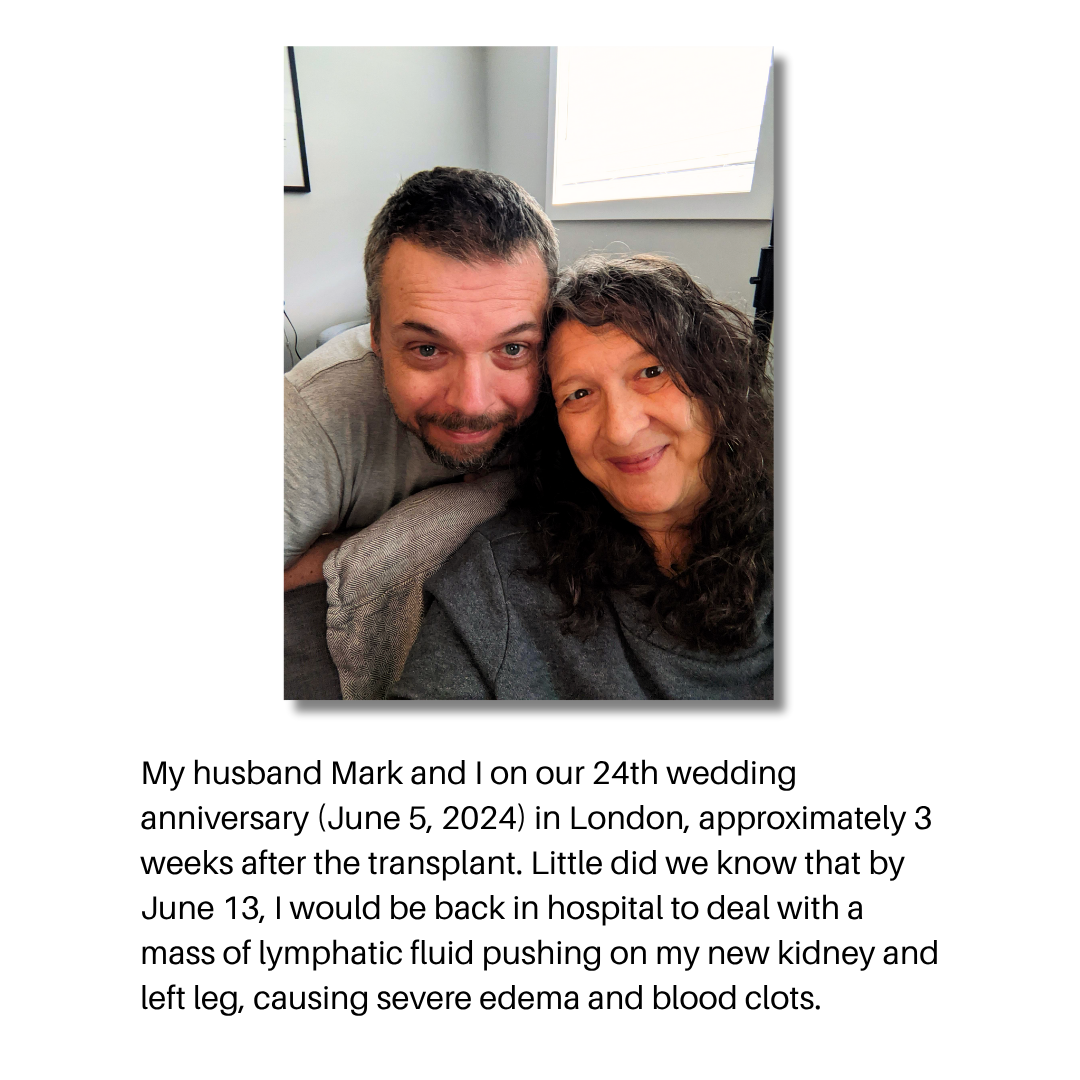
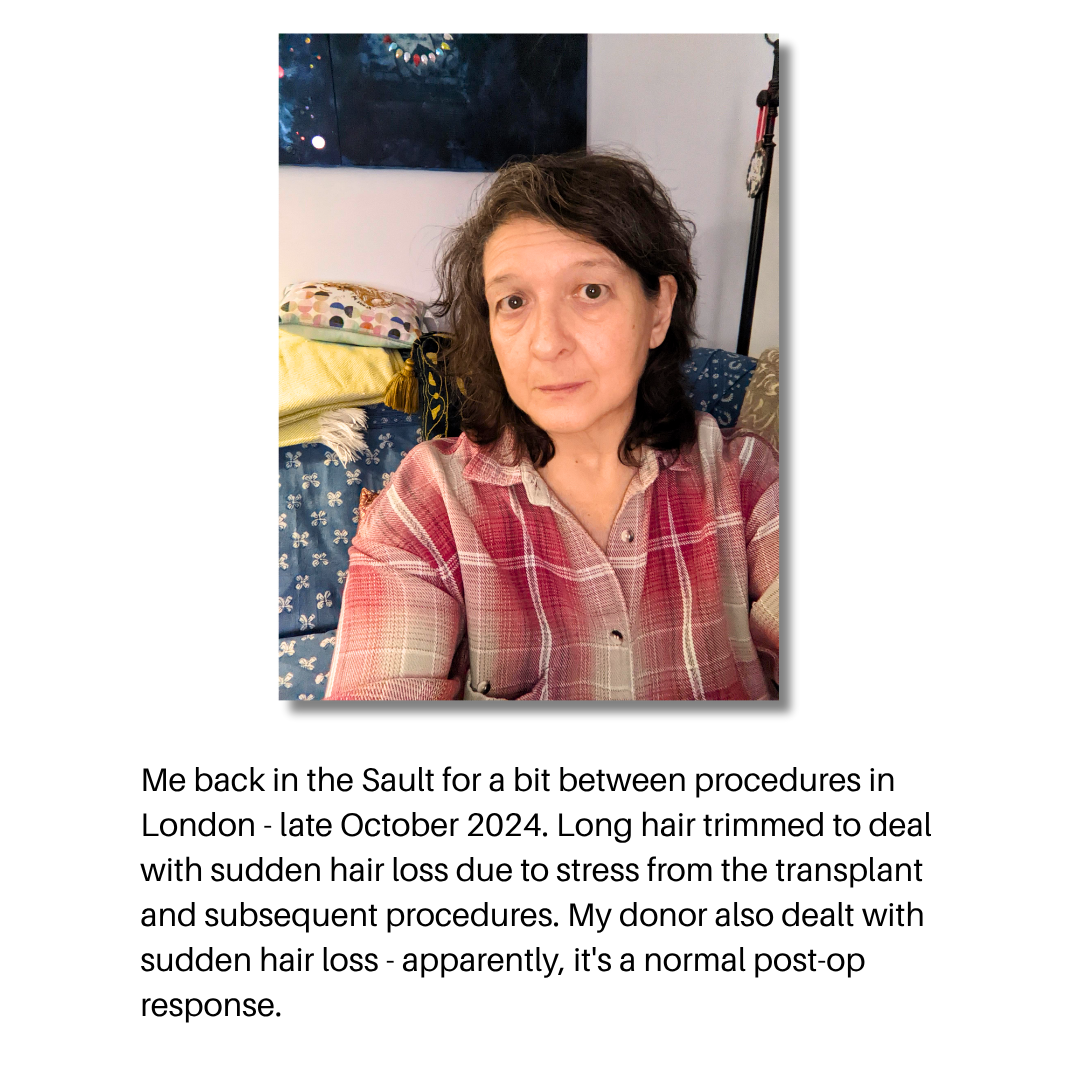 But I did have complications right away. It was eventually discovered that the donated ureter had a rare congenital blockage, which reduced flow and caused backup and swelling. This wasn’t found until three and a half months after the transplant, following an acute rejection episode in the first 24–30 hours and the development of a 1.6-litre lymphocele pocket that was pressing on the new kidney and my left leg. It took two months and multiple abdominal drains to clear the fluid.
Once the ureter was explored and dilated, my “new-to-me” kidney began functioning more efficiently, and my internal chemistry started to stabilize. We had to remain in London from mid-May to mid-November to manage these issues and a few others.
Once we were back in the Sault, I slept a lot and slowly got back into cooking. More challenges cropped up in March 2025 as medications were adjusted and changed. Thankfully, things seem to have stabilized now that it’s July.
All in all, it’s been a fascinating - though at times truly frustrating - experience, but one I would never trade. It certainly helps that my friend and donor, Donna, is doing so well a year later. That is the greatest gift for me. Knowing she is happy, healthy, and back to doing all the things she loves helps me honour her gift even more.
I’m doing my best to meet every challenge with curiosity, grace, and a deep resolve to get stronger and healthier every day.
The Gift of Life
To people considering becoming a living organ donor, I would say: know that you are changing someone’s life for the better - even if there are complications. Life for the recipient becomes something new, and truly, an adventure.
As a donor, know that the transplant teams have your health foremost in mind. You are their primary concern. If something is discovered during your assessment that needs addressing or disqualifies you from the process, they will tell you and help you get the care you need. No one is ever forced to be a living donor. You are always in control.
More
We have several transplant stories in our Voices of PKD series. If you or someone you love is facing transplant, you may find value in reading about a variety of patient experiences.
- Luisa underwent a double transplant (kidney and liver) in 2024, after a number of PKD symptoms and complications.
- Karen's transplant experience crossed international boundaries, as she and her sister-in-law participated in the Kidney Paired Exchange Program.
- Joanna found her perfect match in her friend and former coworker, Kris.
- Nina was blessed with the gift of life before she was unable to continue with dialysis.
- ARPKD patient Marie-Pierre had her transplant soon after transitioning from pediatric to adult care.