Finding a living kidney donor can feel overwhelming. Many people do not know where to begin, how to tell their story, or how to talk about living donation without putting pressure on others.
You do not have to directly ask someone, “Will you give me a kidney?” Instead, you can let people know that you need a transplant, explain how living kidney donation works, and give them a safe way to learn more.
This page includes practical tools, webinars, examples and Canadian resources for people with polycystic kidney disease (PKD) who are looking for a living kidney donor.
What is a living kidney donor?
A living kidney donor is a healthy person who chooses to give one of their kidneys to someone who needs a transplant.
A donor may be:
- a family member;
- a friend;
- a co-worker;
- a neighbour;
- someone from a faith or community group; or
- someone who did not previously know the recipient.
A potential donor does not need to decide right away. They can contact a living donor program privately to ask questions and learn whether donation may be an option.
The transplant team, not the person seeking a kidney, decides whether someone can safely donate.
Why can finding a donor be difficult for people with PKD?
PKD often runs in families. This means that some close relatives may also have PKD, may be at risk of developing it, or may not be able to donate for another medical reason.
Because of this, people with PKD may need to share their story beyond their immediate family.
Talking publicly about needing a kidney can feel uncomfortable. You may worry about asking too much, sharing private health information, or making someone feel guilty.
These feelings are common. There are ways to spread the word without asking any one person to donate.

Start by telling people what is happening
Many people will not know that you need a kidney unless you tell them.
You can begin with a simple message that explains:
- that you have kidney disease;
- that your kidneys are failing or may fail;
- that you are being assessed for, or approved for, a kidney transplant;
- that a transplant from a living donor may be an option; and
- where someone can get confidential information.
The goal is not to pressure anyone. It is to help more people understand your situation and share your message.
Someone who cannot donate may still be able to help by forwarding your story to their own family, friends or community.
Learn how to share your story
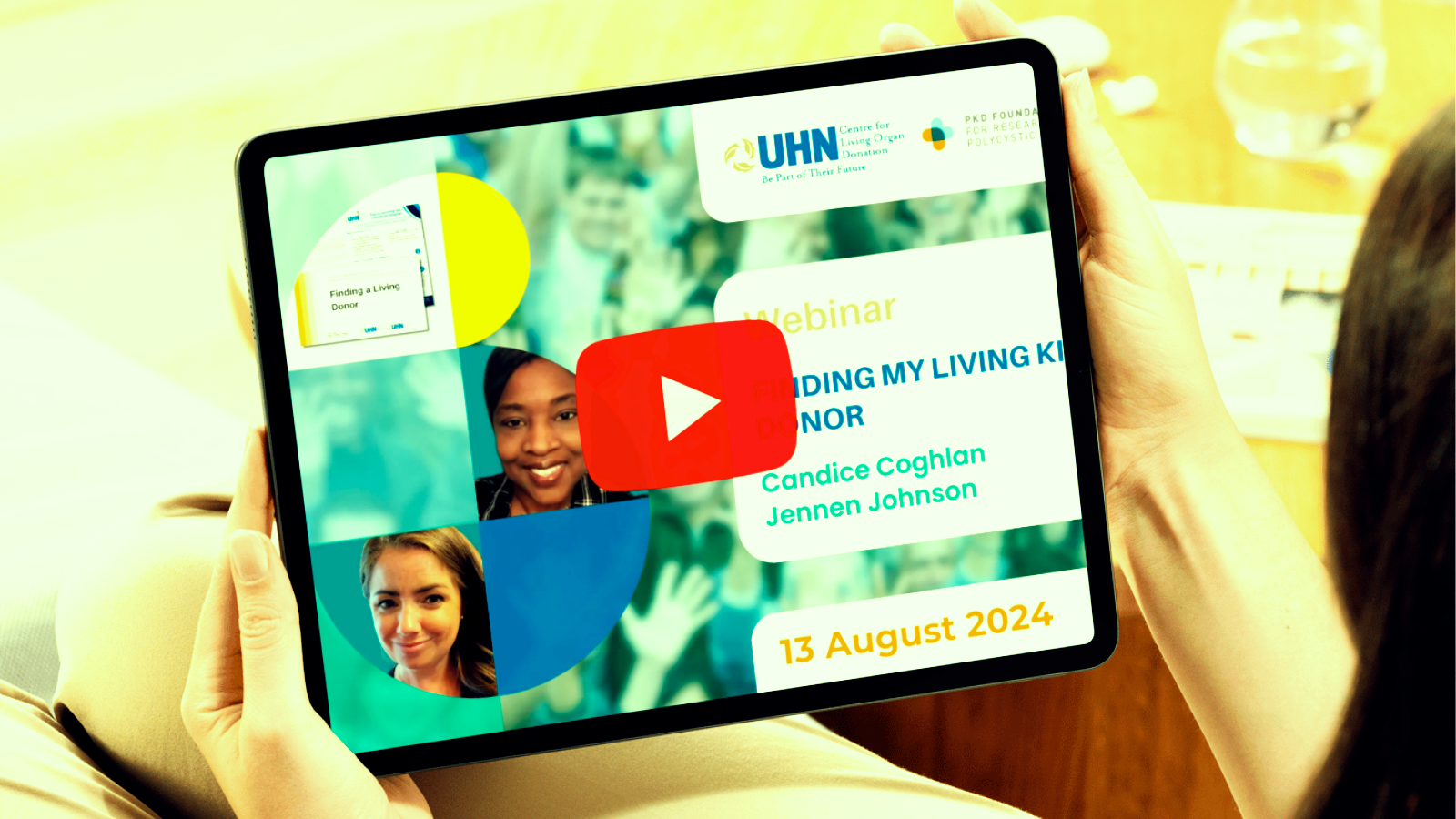
The PKD Foundation of Canada hosted a webinar called Finding My Living Kidney Donor, featuring Candice Coghlan from the Centre for Living Organ Donation at University Health Network (UHN).
Candice works to raise awareness of living organ donation and help transplant candidates communicate their need for a donor.
The webinar covers:
- how to begin your search;
- how to talk about living donation;
- ways to share your story;
- common concerns about asking for help; and
- tools available to people searching for a donor.
Watch Finding My Living Kidney Donor on YouTube
You can also review the follow-up resource email from the webinar. It includes links to UHN information, an online living donation library and templates that can help you write a donor appeal.
View the webinar resources and donor appeal templates

Attend a live Living Donation 101 webinar
The Centre for Living Organ Donation at UHN offers free online Living Donation 101 webinars.
Sessions may include:
- how to find a living donor;
- what it means to become a living kidney donor;
- what it means to become a living liver donor; and
- questions from patients, families and potential donors.
Because the sessions are live, participants can ask questions and hear directly from people who work in living donation.
View upcoming Living Donation 101 webinars
Let your living donor find you
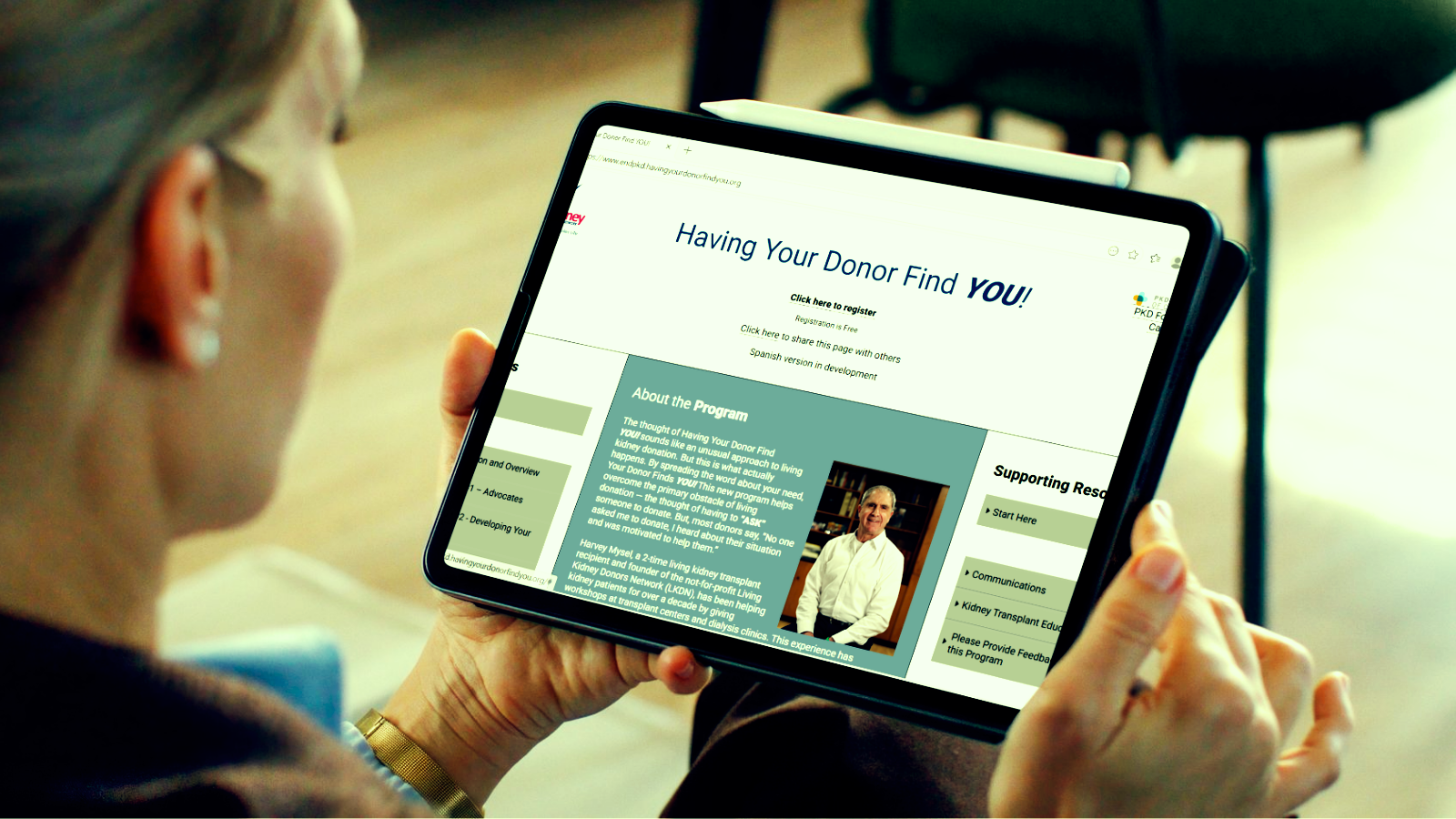
Have Your Living Donor Find You! is a free video-based program for people who find it difficult to ask someone directly to donate.
The program explains how to:
- tell your transplant story;
- build a circle of support;
- use social media and community connections;
- create a clear message;
- reach people outside your immediate family; and
- allow interested people to contact the transplant program privately.
Visit Have Your Living Donor Find You!

Create a patient profile
The Transplant Ambassador Program, also called TAP, has an online directory for patients who are actively seeking living kidney donors.
A profile can help you:
- introduce yourself;
- explain why you need a kidney;
- share what a transplant would mean to you;
- provide contact information for your living donor program; and
- give people a page that is easy to share.
You do not need to build your own website to have an online donor profile.
View the TAP Patients Seeking Donors directory
The directory also includes an option to create your own patient profile.
The PKD Foundation of Canada may be able to help you organize or write your profile. Contact us to learn more.
Use social media to share your search
Some people create a Facebook page, Instagram account or other social media page for their donor search.
A separate public page can give you one place to:
- tell your story;
- post health or transplant updates;
- explain living donation;
- share the transplant program’s contact information;
- thank people for sharing your message; and
- keep your donor search separate from your personal social media account.
Two members of the Canadian PKD community have created public Facebook pages about their searches:
These pages are personal examples, not official medical or transplant resources. Each person’s situation and donor search will be different.
Consider creating a simple website
A website can give you more space to explain your story and answer common questions.
It might include:
- a short introduction;
- your experience with kidney disease or PKD;
- why you need a transplant;
- what a transplant would make possible;
- basic information about living kidney donation;
- the contact information for your transplant centre; and
- buttons people can use to share the page.
Krista Merkley’s family created Kidney 4 Krista to support her search for a living kidney donor.
Visit the Kidney 4 Krista website
A website is not required. A TAP profile, social media page, email or printable letter may work just as well. Choose an approach that feels manageable for you.

Read stories from other people with PKD
Hearing how other people have handled a donor search can make the process feel less lonely.
Keith and Gillian
Keith lives with PKD, and Gillian is his wife and caregiver. They share their experiences with advanced PKD and searching for a living kidney donor.
Read Keith and Gillian’s story
Kim Holowatiuk
Kim shares her experience of living with PKD, reaching Stage 5 kidney disease and searching for a kidney donor.
Krista Merkley
Krista talks openly about the shock of learning how quickly her kidney function had declined, her hopes for a living donor transplant, and what happened when her original plans changed.

Tips for writing a living kidney donor message
Your message does not need to be long or perfect. Try to write in your own voice.
You may want to include:
Who you are
Share a little about your life, family, work, interests or community. Help readers see you as a whole person, not only as a patient.
What is happening
Explain that you have kidney disease and need, or expect to need, a kidney transplant. You can share as much or as little medical information as feels comfortable.
Why you are looking for a living donor
Briefly explain that a kidney from a living donor may allow you to receive a transplant sooner. Your transplant team can help you understand how living donation applies to your situation.
What you are asking people to do
You can ask people to:
- read your story;
- learn about living kidney donation;
- share your message;
- contact the living donor program privately if they are curious; or
- help you reach more people.
You do not need to ask them directly to donate.
How someone can learn more
Include the correct contact information for your transplant centre’s living donor program.
Potential donors should speak directly with the transplant program. Their questions, medical information and decision are kept separate from the intended recipient.
A sample message
I have polycystic kidney disease, also called PKD, and my kidneys are no longer able to do everything my body needs. My healthcare team has told me that I need a kidney transplant.
I am sharing my story because a transplant from a living kidney donor may be an option for me. I know that donating a kidney is a major and very personal decision. I am not asking anyone to make that decision today.
You can help by learning about living kidney donation or sharing my story with others. Anyone who would like confidential information can contact my transplant centre’s living donor program directly.
Even sharing this message could help it reach the person who needs to see it.
You can change this wording so it sounds like you.
Protect your privacy and safety
Before sharing your story publicly, think about which personal details you want people to know.
You do not need to publish:
- your home address;
- private medical records;
- government identification;
- financial information;
- passwords;
- your transplant identification number, unless your transplant centre has specifically told you to use it; or
- personal details about other family members.
Be cautious if someone asks you for money, banking information or payment in exchange for a kidney.
Buying or selling an organ is illegal in Canada. Living organ donation must take place through an authorized transplant program.
Report suspicious messages to your transplant team. You can also block or report suspicious social media accounts.

Questions to ask your transplant team
Your transplant program is the best source of information about your own donor search.
You may want to ask:
- Am I approved to begin looking for a living kidney donor?
- What should a potential donor do first?
- Who should potential donors contact?
- Can someone contact the donor program without telling me?
- Does blood type affect who can donate to me?
- Is paired kidney donation an option?
- What information should I include in a public appeal?
- Can the program review my donor message or profile?
- Are there costs that donors may be able to have reimbursed?
- What supports are available for potential donors?
You do not have to do everything at once
Looking for a living donor can feel like taking on a public campaign while also managing serious kidney disease.
Start with one small step. You might:
- watch one webinar;
- write a few sentences about your situation;
- tell one trusted friend;
- ask someone to help share your message;
- create a TAP profile; or
- contact the PKD Foundation of Canada for support.
A family member or friend can also act as your “champion.” This person can help write posts, answer general questions, share updates and keep your message moving when you do not have the energy.
We are here to help
The PKD Foundation of Canada can help you find reliable living donation resources and think about how to share your story.
We may also be able to help you:
- organize the information for a donor appeal;
- write or edit a patient profile;
- find examples from other people with PKD; or
- connect with additional kidney and transplant supports.
Contact the PKD Foundation of Canada
Important note
This page provides general information and does not replace advice from your transplant team. Living donor assessment, eligibility, privacy practices and transplant procedures may differ between transplant programs and provinces. Always follow the instructions provided by your own transplant centre.