Medications and Kidney Health | Webinar video
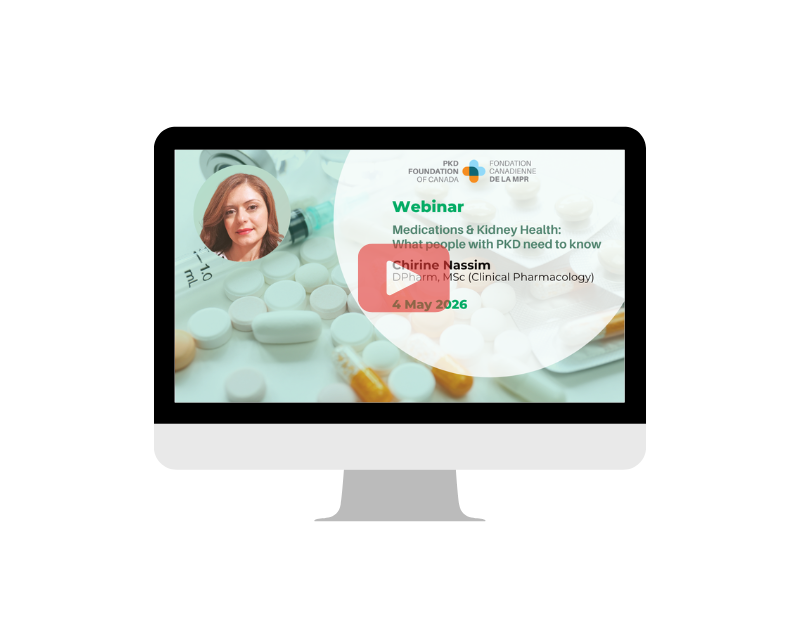
This event was presented live on May 4, 2026.
If you have polycystic kidney disease (PKD), medications can become more complicated as kidney function changes.
Many people wonder:
- Is ibuprofen (Advil®) safe if I have PKD?
- Which pain medications are safest for kidney disease?
- Can vitamins or herbal supplements affect my kidneys?
- What cold or sinus medications should I avoid?
- Why did my doctor reduce my medication dose?
- What does my eGFR have to do with my medications?
In this practical educational webinar, pharmacology expert Chirine Nassim explains how kidney disease changes the way many medications behave in the body, why some drugs require dose adjustments, and how pharmacists can help people with PKD use medications more safely.
Whether you have early-stage PKD, chronic kidney disease (CKD), or more advanced kidney disease, this session explains important concepts that can help you ask informed questions about your medications and supplements.
During the webinar, Chirine discusses:
- how the kidneys remove many medications from the body
- why medications may stay in the body longer as kidney function declines
- why medication doses sometimes need to be reduced or taken less often
- common over-the-counter pain medications (NSAIDs) that may not be kidney-safe
- cold and sinus medications that may affect blood pressure or kidney blood flow
- vitamins, herbal supplements, and "kidney detox" products
- medication interactions and why "natural" does not always mean safe
- how pharmacists assess medication safety using kidney function (eGFR)
- questions people with PKD can ask their healthcare team before starting new medications
The webinar also includes answers to questions submitted by the PKD community about:
- acetaminophen (Tylenol®) and pain relief
- ibuprofen, naproxen, and other NSAIDs
- CBD products
- turmeric and other supplements
- kidney stones
- blood pressure medications
- medications after kidney transplantation
- adjusting medications as kidney disease progresses
One of the key messages from the webinar is that kidney disease does not only affect the kidneys. As kidney function changes, the body may process medications differently too. Understanding how medications, supplements, and kidney function work together can help people with PKD make safer decisions and have more productive conversations with their pharmacist, nephrologist, family doctor, and other healthcare providers.
About the presenter
Chirine Nassim, PharmD MSc (Pharmacology), is an internationally trained pharmacist with a Doctor of Pharmacy degree (Lebanon) and a Master’s in Clinical Pharmacology from the Université de Montréal. She has experience in pharmacovigilance through Health Canada and a strong interest in kidney disease, PKD, and patient safety. She shares educational content to help people better understand PKD and make informed decisions about their health.
Related resources
Want to learn more? You may also be interested in: